
Real connectivity
We promote the opening and use of the border crossings that make up the bioceanic corridors, with concrete routes, not just on paper.
Atacama Region, Chile · since 2018
Facilitators of bioceanic agreements and business
From the Atlantic to the Pacific: real connectivity.
Our strength lies in facilitating, promoting and showcasing our ports and border crossings.
«Fair connectivity with a Social License.»
How we structure our work between two oceans.
We promote the opening and use of the border crossings that make up the bioceanic corridors, with concrete routes, not just on paper.
We facilitate bilateral and multilateral trade integration, and promote the socially and environmentally sustainable, commercially acceptable development of our members.
Exit and entry to Asia-Pacific, through the ports of the Atacama Region and northern Chile, for the imports and exports of the countries of the Capricorn bioceanic corridor and Atacalar.
We facilitate agreements and business in multimodal transport and logistics, and support the territorial management of our member companies with the EN method.
The Bioceanic International Chamber of Commerce A&G (CCIBioceánica) was founded in 2018 in the Atacama Region, Chile, under Registry No. 131-3-2018, and is fully engaged in implementing and carrying out its strategic guidelines.
To foster and promote the opening and use of the border crossings that make up the bioceanic corridors, encourage the territorial management of our member companies, facilitate bilateral and multilateral trade integration, and promote the socially and environmentally sustainable, commercially acceptable development of our members.
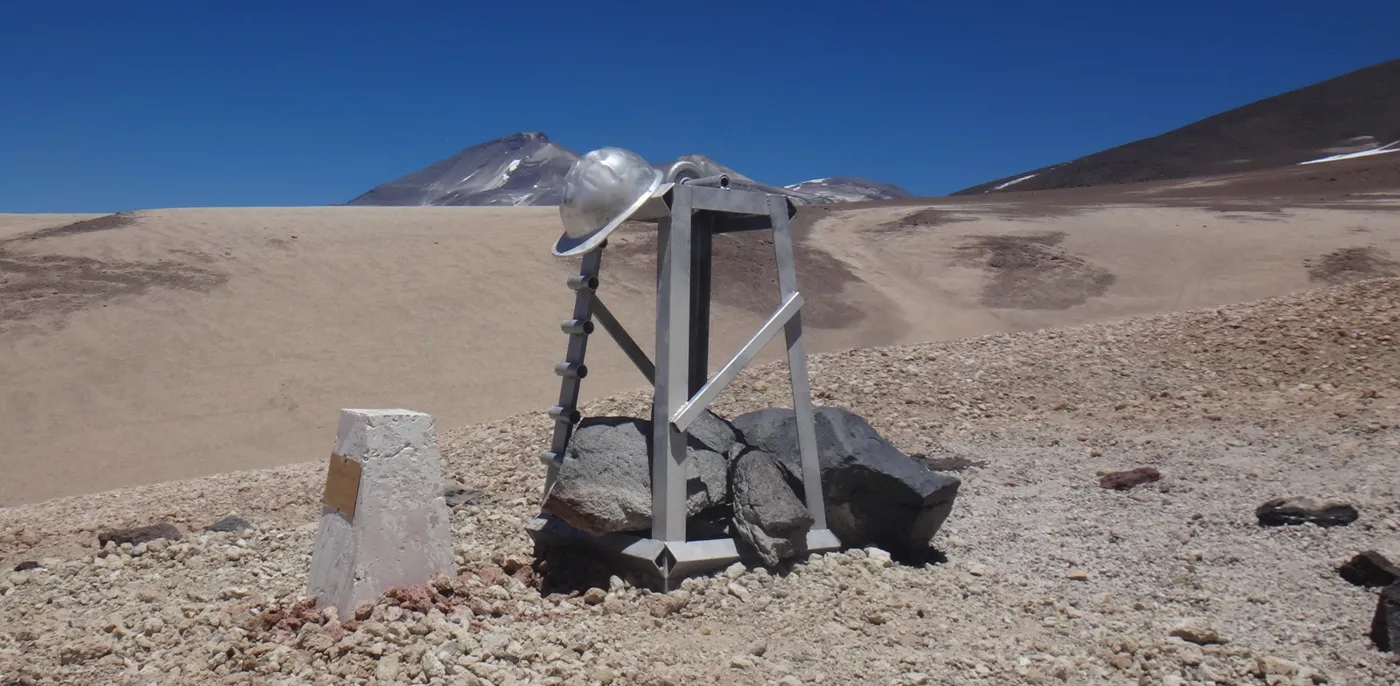
Pillars of integrated management and bioceanic facilitators
The people who lead the Chamber coordinate the work between companies, territories and countries along the bioceanic corridors.
Founding director
Founding director
Founding director
Founding director
Founding director
Our challenge, as a real alternative, is to promote the ports of the Atacama Region through the route we have named the “JamAtacama Bioceanic Route”, with the pre-feasibility studies required: between Campo Grande, Mato Grosso do Sul (Brazil), and the ports of the Atacama Region, through the Jama Pass, Antofagasta Region (Chile).
Besides the Jama Pass, we promote the two border crossings between the Atacama Region and Argentina: San Francisco and Pircas Negras. More options for cargo to reach our ports.
Antofagasta Region · Jujuy
JamAtacama Bioceanic Route: links Campo Grande (Mato Grosso do Sul, Brazil) with the ports of the Atacama Region.
Atacama Region · Catamarca
Route through the San Francisco Pass: connects Copiapó with the province of Catamarca, Argentina, with access to the Atacama ports.
Atacama Region · La Rioja
Route through the Pircas Negras Pass: connects Copiapó with the province of La Rioja, Argentina, as an alternative path of integration towards the Pacific.
The six provinces of Argentina's Northwest produce food, minerals and manufactured goods that can reach Asia-Pacific through the Andean passes and the ports of the Atacama Region.
Route: Jama Pass (RN 52)
Key production
Route: Jama Pass and Sico Pass (RN 51)
Key production
Route: Via Catamarca to the San Francisco Pass
Key production
Route: San Francisco Pass (RN 60)
Key production
Route: Pircas Negras Pass (RN 76)
Key production
Route: Via Tucumán and Catamarca to the San Francisco Pass
Key production
Facilitating is not brokering: it means creating the conditions for the parties to trust each other, talk and reach an agreement they can keep.
By WhatsApp, phone or email.
We listen, review the background and explain the EN method.
Until the agreement is closed, and we come back later to check that it works.
The EN method belongs to ENAtacama, agreement and business facilitators.
The ports of the Atacama Region are part of our strategy: the gateway to the Pacific for the corridor countries.
Private multipurpose port offering logistics and shipping services, boosting regional competitiveness and Atacama's international trade.
▶ Watch on YouTube ↗Audio in Spanish. On YouTube, turn on captions (CC) and choose ⚙ › Subtitles › Auto-translate › English.
Multipurpose port with modern facilities, designed to handle large-scale cargo and strengthen the region's productive development.
Infrastructure specialised in agro-industrial exports, key to connecting Atacama's fruit production with international markets.
Private terminal specialised in logistics and export services, focused on mining and Atacama's international trade.

The Chamber's participation reinforced and positioned the JamAtacama Bioceanic Route as an alternative to the Capricorn bioceanic road corridor. In Jujuy, talks are already starting on cooperation agreements between the Jujuy chamber of exporters and importers and companies related to our Chamber in the Atacama Region.
We propose that Chile recognise an Atacama Bioceanic Corridor as national policy, complementing the Capricorn Corridor: the NOA-Centro axis through the San Francisco and Pircas Negras passes, and the JamAtacama Bioceanic Route, which uses the idle capacity of the ports of Atacama to decongest the Capricorn Corridor.
Presented in 2025 in Porto Murtinho (Brazil), to our Board and to the Regional Government of Atacama. It has not yet received a formal response from public authorities.
Read the proposal (in Spanish) →Four news items from different countries, published by governments and public bodies. Each one links to its official source.
ARArgentina ·
Original title: «Jujuy consolida su vínculo con Asia a través del Corredor Bioceánico de Capricornio»
Source: Gobierno de Jujuy, Agencia Provincial del Corredor Bioceánico de Capricornio
Read at the official source ↗PEPeru ·
Original title: «MTC fortalece diálogo con cámaras binacionales para impulsar la conectividad y la integración regional»
Source: Ministerio de Transportes y Comunicaciones del Perú (gob.pe)
Read at the official source ↗BRBrazil ·
Original title: «Visita técnica marca momento histórico com a ligação física da Ponte da Rota Bioceânica»
Source: Prefeitura de Porto Murtinho (Mato Grosso do Sul)
Read at the official source ↗CLChile ·
Original title: «Delegada Presidencial junto al Gabinete Regional se articulan para consolidar el Corredor Bioceánico»
Source: Delegación Presidencial Regional de Antofagasta (gob.cl)
Read at the official source ↗Summaries written by the Chamber. The full content, and responsibility for it, belong to each source. Selection reviewed on 6 November 2026.
Bioceanic routes for Asia and South America, with a bond of sustainable legitimacy: integration with a purpose.
What is LSo (for information) ↗Let's talk about your bioceanic project. We reply by WhatsApp or email.
The details published on this site are for institutional contact only. They do not constitute a domicile, email address or valid means for judicial, administrative or any other kind of notification.
Click any point of interest 🔊 to hear it in Chinese, with Spanish and Portuguese subtitles.
ES
PT
This device has no Chinese voice installed: subtitles are shown instead.